
Travel & Lodging
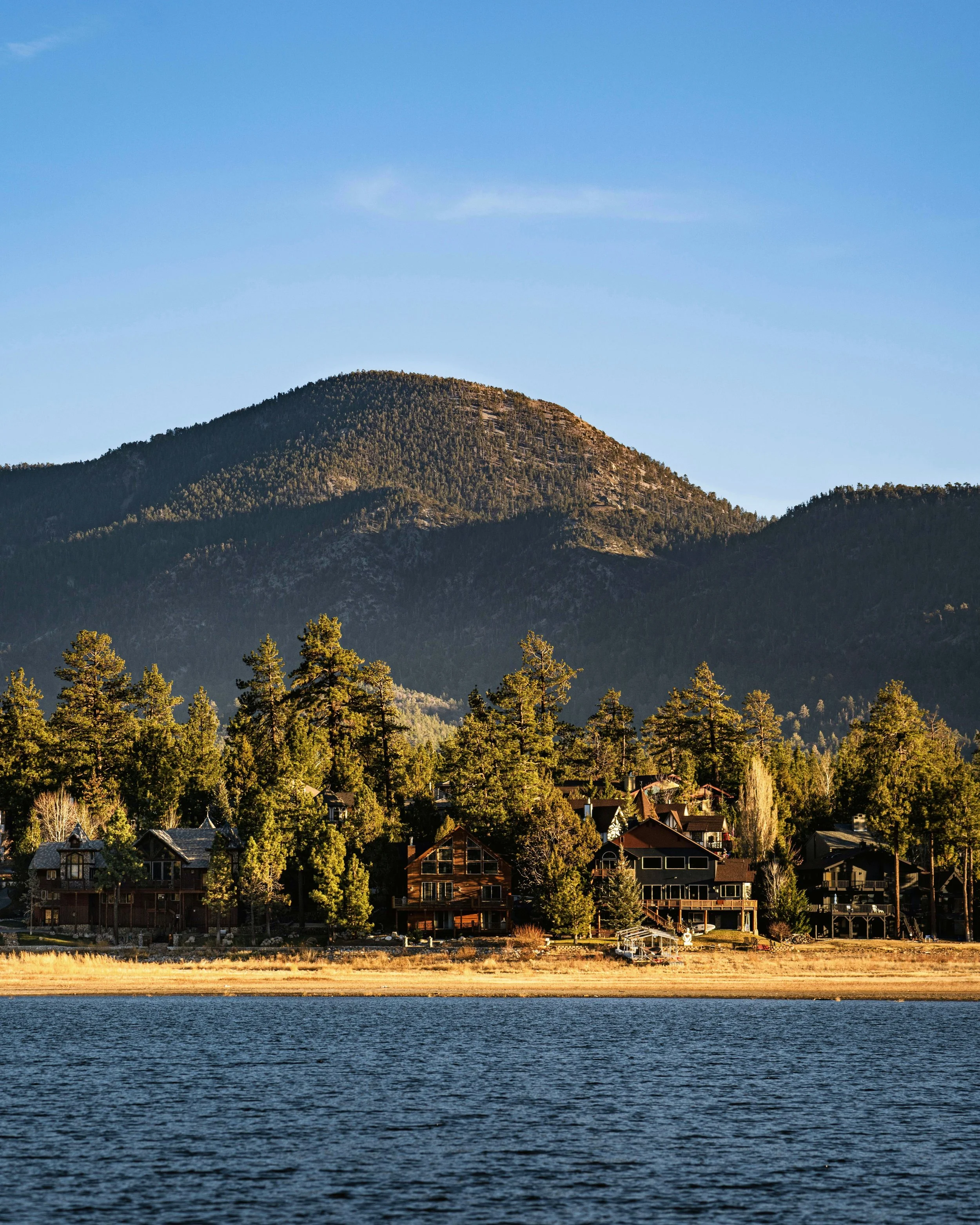
Big Bear Lake is the premier high-altitude destination in Southern California. To help you prepare for event weekend, we’ve outlined the best ways to get here and the best types of basecamps for your mountain experience.
Where to Stay
Big Bear is famous for its cabin culture and mountain hospitality. Whether you are traveling solo or with a crew, we recommend looking into these categories of lodging:
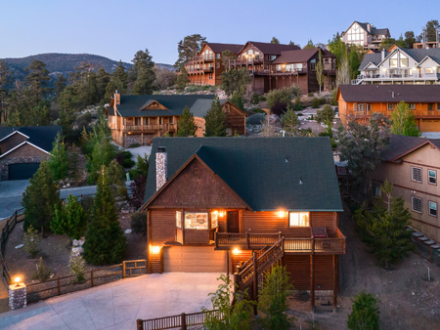
Private Vacation Rentals & Cabins: This is the most popular way to experience Big Bear. It allows you to have a full kitchen for pre-run meals and a private space to relax and recover.
Lodges & Boutique Hotels: For those who prefer a traditional hotel experience, there are several beautifully renovated boutique lodges and full-service hotels along the lake that offer easy access to dining and shops.
Campgrounds: There are reservable, first come-first serve, and primitive, dispersed camping in the US National Forest.
BigBear.com
Head over to BigBear.com to book lodging, find the best restaurants, plan local activities, and learn all about Big Bear Lake!
Host Hotel
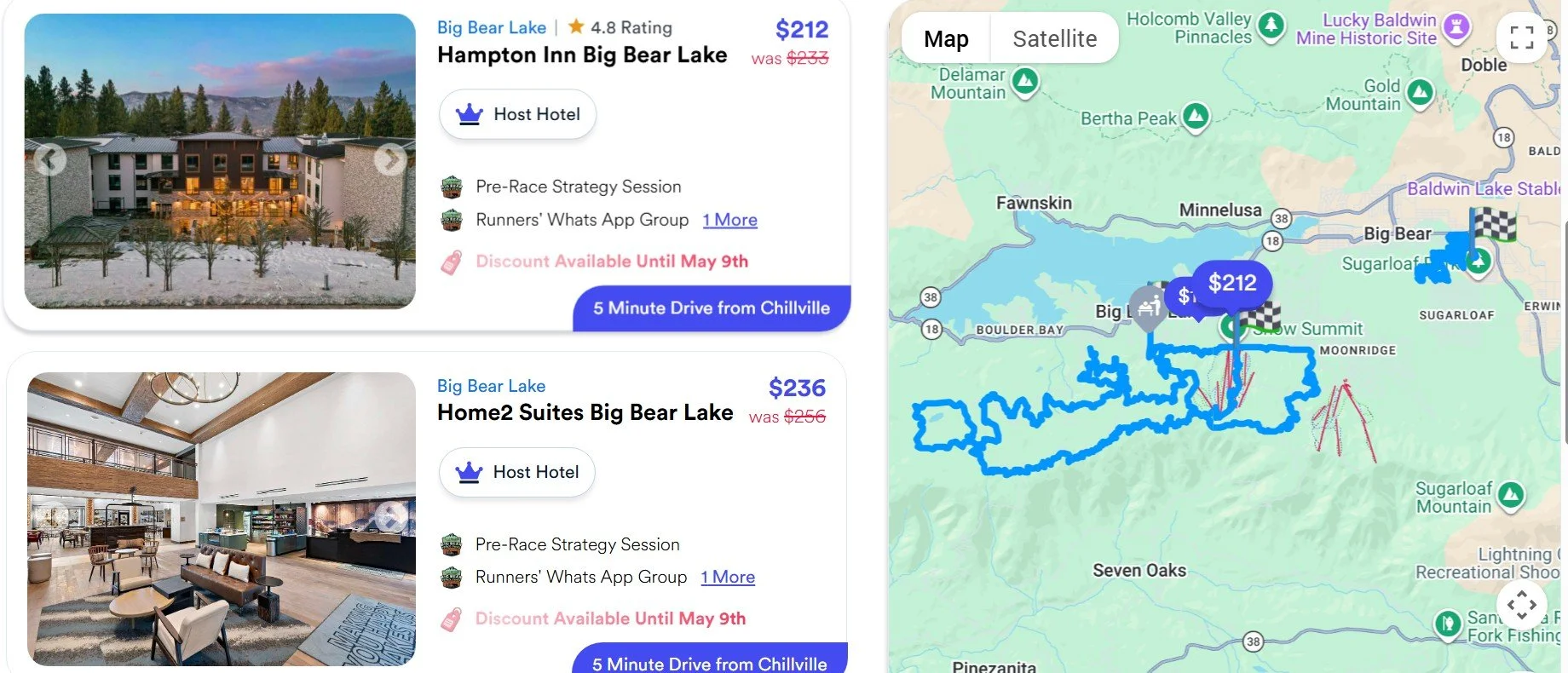
Grab your spot at the Host Hotel for an even more unique experience! When you book at the Host Hotel you get the best price, special perks, and connection with the event community.
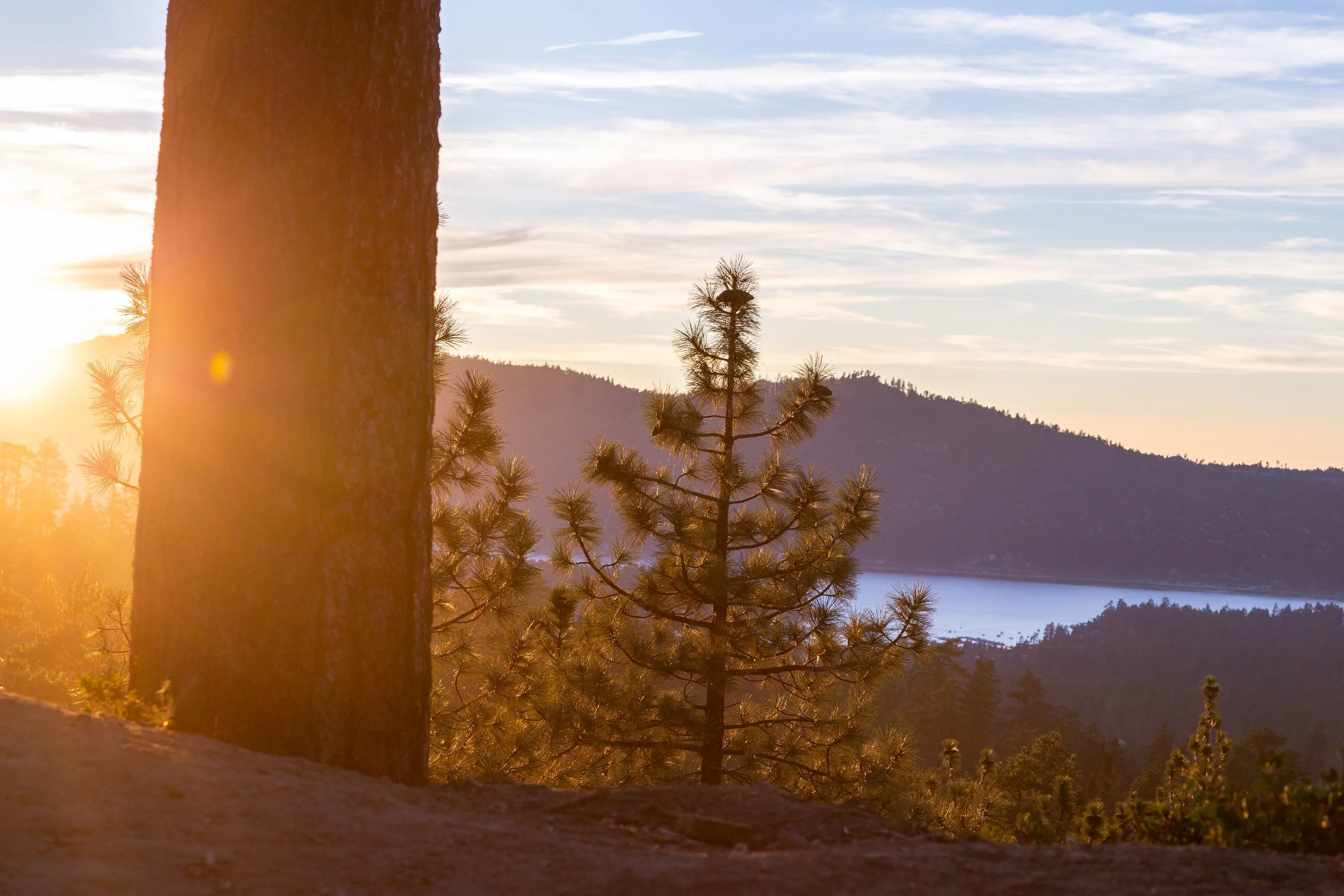
Getting to Big Bear
Big Bear Lake is centrally located in the San Bernardino Mountains, roughly 2 hours from Los Angeles, Orange County, and San Diego.
Air Travel
If you are flying in from out of state, there are several hubs to choose from. Mileage below is approximate to the Big Bear Valley:
Ontario International (ONT) – 42 miles: Generally the most convenient choice for most travelers. It offers a wide range of domestic flights and a much more relaxed experience than LAX.
Palm Springs International (PSP) – 38 miles: A scenic alternative, especially for those who want to take the gradual climb up to Big Bear via Hwy 38.
John Wayne/Orange County (SNA) – 68 miles: A great mid-sized option if you are coming from the coast or seeking a less hectic arrival.
Los Angeles International (LAX) – 89 miles: The primary international hub with the most flight options, though you should factor in the potential for city traffic before starting your mountain drive.
The Drive
There are three main routes up to the Big Bear Valley. We recommend checking Caltrans for real-time road conditions before you head up:
Hwy 330 (via Running Springs): Typically the most direct route from most of Southern California.
Hwy 38 (via Redlands): The "back way" - a longer, more gradual climb with beautiful scenery and often much less traffic on weekends.
Hwy 18 (via Lucerne Valley): The preferred route if you are coming from the high desert or Las Vegas.